

Best Low Impact Core Exercises to Reduce Low Back Pain and Injury

Low back pain often shows up when the spine does too much work and the hips, glutes, deep abs, or breathing muscles do too little. The fix is not always harder workouts or more crunches. For many people, the better starting point is low impact core training that teaches the trunk to stay steady while the arms and legs move.
A strong core is not just a six-pack. It includes the deep abdominal muscles, obliques, diaphragm, pelvic floor, spinal stabilizers, glutes, and muscles around the hips. Together, they help control motion, protect the spine, and spread force through the body.
The best low impact core exercises to reduce back pain focus on control, breathing, and spinal stability. They should feel challenging but not sharp, pinchy, or irritating. This guide is informational and not a medical diagnosis. If back pain is severe, spreading down the leg, linked with numbness or weakness, or caused by a fall or injury, get checked by a qualified health professional.

Why low impact core work helps the lower back
The lower back is built to move, but it also needs support. When daily movement depends too much on the lumbar spine, small tissues can get irritated. This can happen during lifting, twisting, prolonged sitting, running, yardwork, or even getting out of a chair.
Low impact core exercises help because they train the body to:
Keep the spine in a safer, more neutral position
Build endurance in the muscles that support the trunk
Improve coordination between the ribs, pelvis, hips, and shoulders
Reduce unwanted twisting or arching during movement
Make everyday tasks feel less stressful on the back
The goal is not to lock the spine in place. The goal is to control movement better.
A good core routine for back comfort usually avoids repeated spinal flexion at first. That means fewer sit-ups, aggressive crunches, and fast twisting moves, especially when pain is active. Those exercises are not “bad” for everyone, but they can be poor choices when the back is sensitive.
A better approach starts with anti-movement exercises. These train the core to resist motion:
Anti-extension Preventing the low back from over-arching
Anti-rotation Preventing the trunk from twisting when force is applied
Anti-lateral flexion Preventing the torso from bending side to side
These patterns carry over well to real life. Carrying groceries, picking up a child, climbing stairs, and lifting a suitcase all require this kind of trunk control.
Start with these safety rules before you train
Low impact does not mean zero effort. Some of these exercises can be surprisingly hard when done well. The key is to make the right muscles work without flaring the back.
Use these rules before and during each session.
Keep pain in the safe zone. Mild muscle effort is fine. Sharp pain, shooting pain, numbness, or symptoms that worsen after the workout are signs to stop and adjust.
Use a neutral spine. Neutral does not mean perfectly flat. It means the low back keeps its natural gentle curve without excessive arching or rounding.
Breathe during every rep. Holding your breath can increase pressure and tension. Exhale slowly during the hardest part of the movement.
Start with short holds. A clean 8-second hold is better than a shaky 45-second hold. Build endurance gradually.
Move slowly. Speed hides poor control. Slow movement lets the nervous system learn.
Stop before form breaks. If the ribs flare, hips shift, back arches, or neck tightens, the set is done.
A simple effort scale helps. Aim for a 4 to 6 out of 10 difficulty level at first. The exercise should feel like work, but you should still be able to breathe and stay controlled.
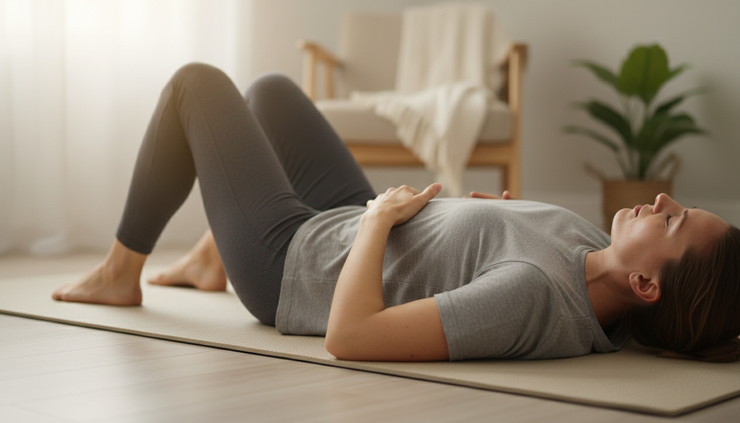
The best low impact core exercises for low back pain
These exercises are not ranked by difficulty. They work best as a group because each one trains a different part of spinal control. Start with 4 or 5, then add more as your back tolerates them.
Dead bug
The dead bug teaches the core to resist arching while the arms and legs move. It is one of the most useful beginner-friendly core drills because the floor gives feedback.
Lie on your back with knees bent at 90 degrees and arms reaching toward the ceiling. Gently brace as if preparing for a cough. Slowly lower one heel toward the floor while keeping your ribs down and low back steady. Return and switch sides.
To make it easier, move only one leg at a time and keep the arms still. To make it harder, extend the opposite arm and leg together.
Aim for 2 to 3 sets of 6 to 10 slow reps per side.
Bird dog
The bird dog trains balance, glute strength, and anti-rotation. It also teaches the hips and shoulders to move without pulling the lower back along for the ride.
Start on hands and knees. Place hands under shoulders and knees under hips. Brace gently. Reach one leg straight back. If that feels stable, reach the opposite arm forward. Pause, then return slowly.
The most common mistake is lifting the leg too high. Keep the hips level and imagine balancing a cup of water on your low back.
Aim for 2 to 3 sets of 5 to 8 reps per side, with a 3 to 5 second pause.
Modified side plank
The side plank builds the obliques and side hip muscles, which help protect the spine from side bending and twisting stress.
Lie on one side with knees bent. Prop up on the forearm, keeping the elbow under the shoulder. Brace, press the knees gently into the floor, and lift the hips. The body should make a straight line from shoulders to knees.
Keep the neck relaxed and avoid rolling the top shoulder forward.
Start with 3 to 5 holds of 8 to 15 seconds per side. Build toward longer holds only if form stays clean.
Glute bridge
The glutes are a major support system for the lower back. When they do not contribute well, the lumbar spine often picks up extra work. The glute bridge trains hip extension in a low impact position.
Lie on your back with knees bent and feet hip-width apart. Gently brace. Press through the heels and lift the hips until the body forms a straight line from shoulders to knees. Pause at the top, then lower with control.
Do not push so high that the low back arches. Think of lifting with the glutes, not the spine.
Aim for 2 to 3 sets of 8 to 12 reps.
Heel taps
Heel taps are a simple way to train lower abdominal control without aggressive spinal flexion.
Lie on your back with knees bent at 90 degrees. Bring the ribs down slightly and brace. Slowly tap one heel to the floor, then return. Alternate sides.
If the low back arches, reduce the range of motion. You can also keep one foot on the floor while moving the other leg.
Aim for 2 to 3 sets of 8 to 12 reps per side.
Pallof press
The Pallof press is an anti-rotation exercise usually done with a resistance band. It is excellent for training the core to resist twisting.
Anchor a band at chest height. Stand sideways to the anchor and hold the band at your chest. Step away until there is light tension. Brace, press the hands straight forward, pause, then bring them back.
Your torso should stay still. If the band pulls you into rotation, move closer to the anchor or use a lighter band.
Aim for 2 to 3 sets of 8 to 10 reps per side.

More low impact exercises that build real-world strength
Once the basics feel good, add exercises that look more like everyday movement. These build the kind of core strength that helps during walking, lifting, carrying, and reaching.
Suitcase carry
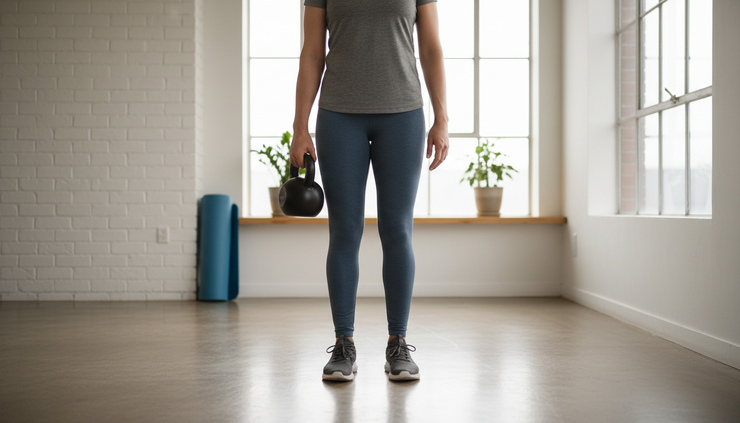
A suitcase carry trains the core to resist side bending. It also strengthens grip, shoulders, hips, and posture.
Hold one dumbbell, kettlebell, or heavy household item at your side. Stand tall with ribs stacked over pelvis. Walk slowly without leaning. Switch sides.
Start with 20 to 40 seconds per side. Use a weight that challenges posture without changing it.
Farmer carry
A farmer carry uses weight in both hands. It teaches full-body tension and upright posture without impact.
Hold equal weights at both sides. Keep shoulders relaxed, chest quiet, and steps smooth. Walk for time or distance.
Start with 2 to 4 rounds of 30 to 60 seconds.
Wall plank
A wall plank is a gentle option when floor planks feel too intense.
Stand facing a wall. Place forearms on the wall at shoulder height and step the feet back. Brace and hold a straight line from head to heels. Keep the ribs from flaring.
Hold for 15 to 30 seconds. As strength improves, move to a countertop plank, then an incline plank on a bench.
Marching bridge
This is a progression from the glute bridge. It adds anti-rotation and hip control.
Lift into a bridge. Without letting the pelvis drop or twist, raise one foot slightly off the floor. Lower it and switch sides.
Use a small movement. If the hips wobble, return to regular bridges for a while.
Aim for 2 sets of 5 to 8 marches per side.
Cat-cow for gentle mobility
Cat-cow is not a strengthening drill in the same way as the others, but it can help some people reduce stiffness and reconnect with pain-free spinal motion.
Start on hands and knees. Slowly round the back, then gently arch it. Move within a comfortable range. Do not force either position.
Try 5 to 8 slow cycles before core work as a warm-up.
How to build a simple core routine
A good routine does not need to be long. Ten to 20 focused minutes, done consistently, can work better than a hard session that leaves the back irritated.
Here is a simple starting plan for 3 days per week.
Exercise | Sets | Reps or time |
Dead bug | 2 | 6 to 10 reps per side |
Bird dog | 2 | 5 to 8 reps per side |
Modified side plank | 3 | 8 to 15 seconds per side |
Glute bridge | 2 | 8 to 12 reps |
Pallof press | 2 | 8 to 10 reps per side |
Rest 30 to 60 seconds between sets. Keep the pace slow. Quality matters more than fatigue.
On days between strength sessions, easy walking can help many people stay loose and build general tolerance. If walking worsens symptoms, shorten the distance or speak with a clinician.
Use this progression:
Add control first
Make each rep smoother before adding more work.
Add time or reps next
Increase holds by 5 seconds or add 1 to 2 reps per set.
Add resistance last
Use a heavier band, longer lever, or light weights only when form is stable.
A good weekly goal is to finish each session feeling better, looser, or more confident, not crushed.
Common mistakes that can make back pain worse
Even helpful exercises can irritate the back when done too hard or too soon. Watch for these common errors.
Chasing the burn. Core training for back pain is about endurance and control. It does not need to feel extreme.
Arching during leg movements. If the low back lifts or ribs flare during dead bugs or heel taps, reduce the range.
Twisting through fatigue. Bird dogs, Pallof presses, and carries should look steady. Shifting and wobbling mean the load is too high.
Skipping the hips. Strong abs help, but glutes and hip muscles matter too. Bridges and carries are not optional extras.
Holding long planks with poor form. A short, clean plank beats a long plank with sagging hips and a tight low back.
Ignoring recovery. Sore muscles are normal. A back flare that lasts into the next day is feedback. Scale down.
Also be careful with popular core moves that may not suit an irritated back, such as full sit-ups, fast bicycle crunches, heavy Russian twists, high-rep toe touches, and advanced hanging leg raises. Some people can do them safely later, but they are rarely the best first step.
When to get professional help
Low back pain is common, and many mild cases improve with time, smart movement, and strength work. Still, some symptoms deserve medical attention.
Seek care promptly if back pain comes with:
Numbness, tingling, or weakness down the leg
Loss of bladder or bowel control
Fever or unexplained weight loss
Pain after a fall, crash, or major injury
Pain that keeps getting worse despite rest and gentle movement
Night pain that does not change with position
A physical therapist, physician, chiropractor, or qualified rehab professional can help identify what movements are safe and which exercises fit your situation.
The takeaway
The best core routine for a sensitive low back is usually simple, steady, and repeatable. Start with dead bugs, bird dogs, modified side planks, glute bridges, heel taps, and Pallof presses. Add carries and gentle progressions when the basics feel solid.
Train the core to control motion, not just create motion. Keep the spine calm, build endurance, strengthen the hips, and progress slowly. That approach gives the lower back more support during the movements that matter most: standing, walking, lifting, carrying, bending, and living without fear of every small twist or reach.
Peace & Wellness
Patricia Pointer
COTA
Licensed Massage Therapist
Medical Massage Practitioner
Wellness/Mindfulness Coach/Consultant


Comments